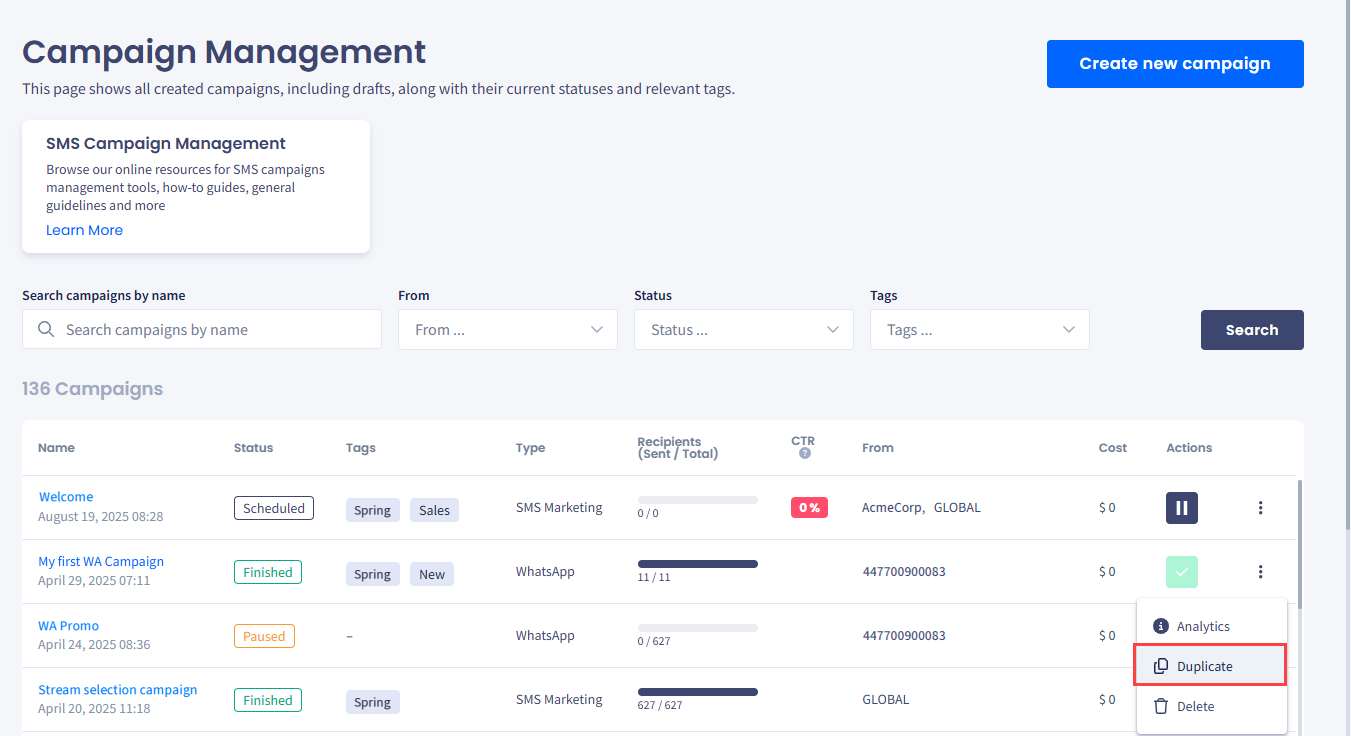
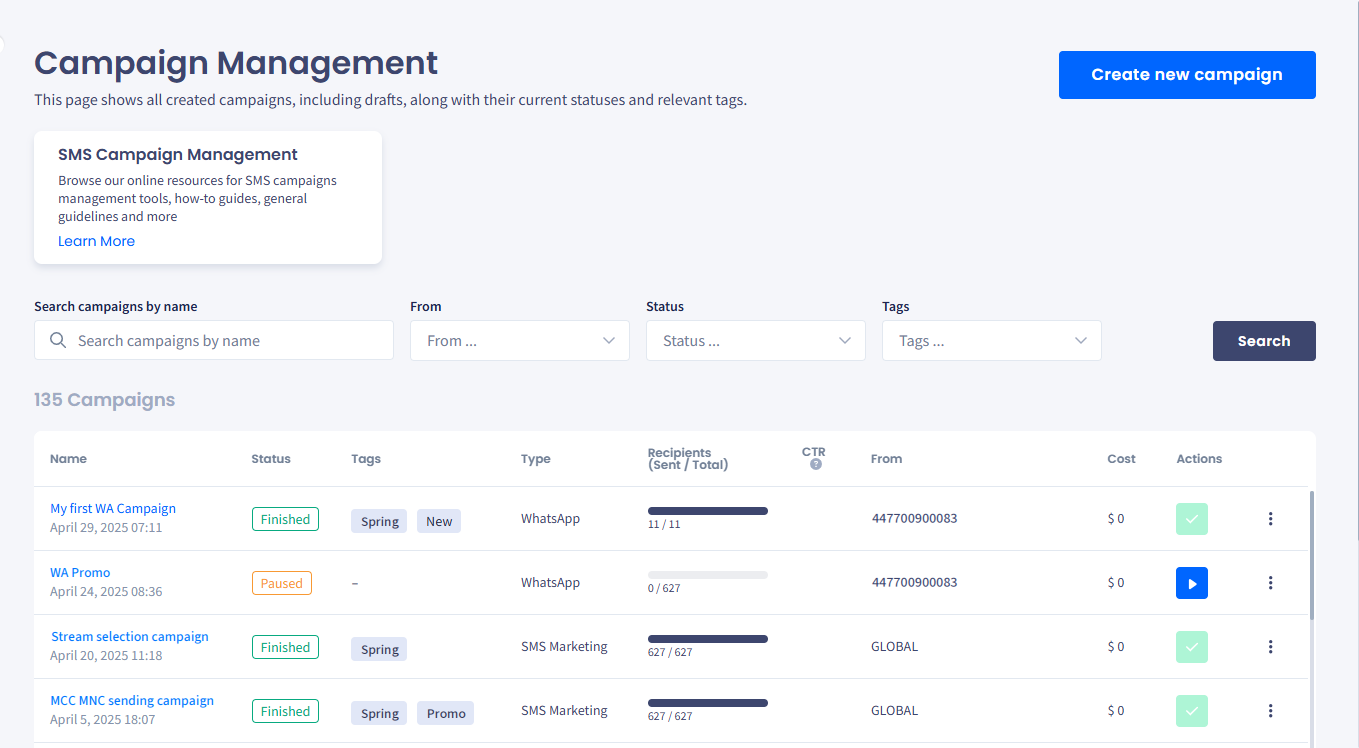
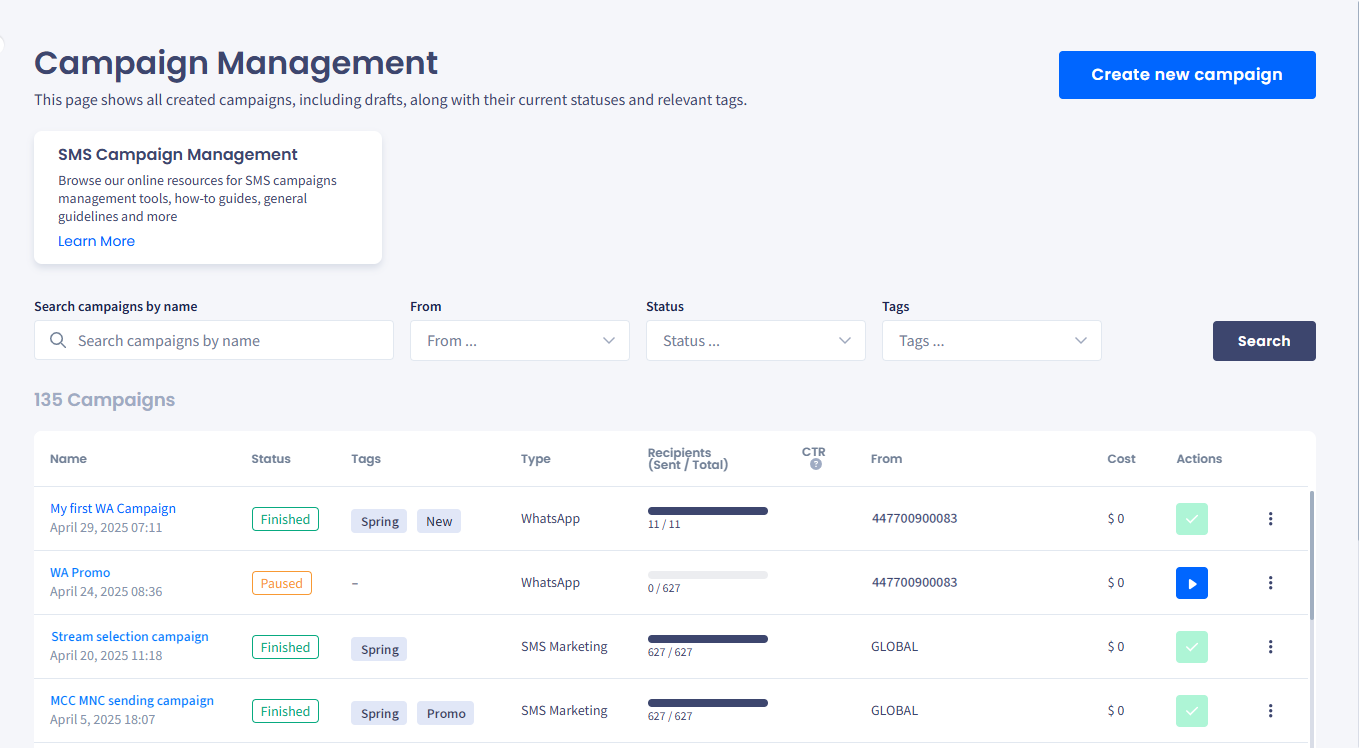
To reuse a campaign you have already run, open Campaigns in the main menu, find the campaign in the table, and click Duplicate in the three-dot menu at the end of its row. TextPeak creates a draft clone you can edit.
Duplicate menu option
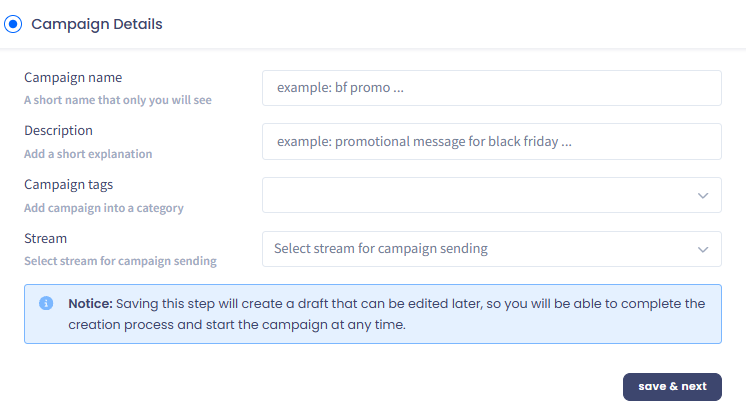
Campaign details
The wizard starts with the campaign details.
Campaign name - enter a meaningful name so you can find the campaign quickly.
Description - add more information, which appears when you open the campaign.
Campaign tags - select tags from the drop-down list to categorize the campaign. This is optional. To create a tag, type its name in the field and press Enter.
Stream - select the WhatsApp route this campaign sends through, then move to the next step.
📘
NOTE
The Stream field lists WhatsApp routes only. The product still labels this field Stream even though the page that holds these routes is now called Channels.
Campaign Details section
📘
NOTE
TextPeak saves the campaign as a draft at every step and adds it to the campaign list with the Draft status, so you can click Edit to come back and finish it later. Clicking save & next completes the step and expands the next tab.
Send to
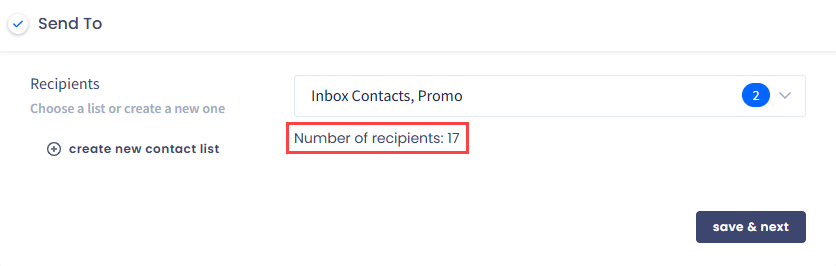
Define the recipients. Choose one or more existing contact lists or segments from the drop-down list, or create a new list or segment without leaving the wizard.
The recipient count is the total number of contacts in the lists or segments you selected.
Send To section
From
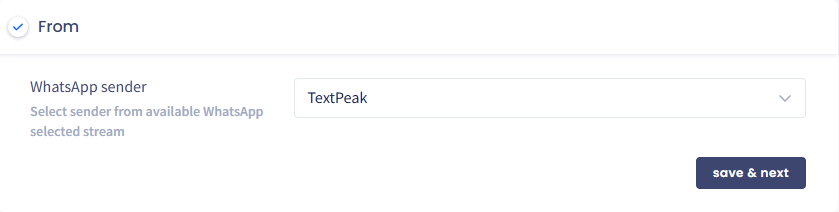
Select the WhatsApp sender from the channel you chose in the campaign details. Where a channel has several senders, set an equal or a custom ratio to control how often each one is used.
❗️
IMPORTANT
A campaign can only use senders that belong to the selected channel, and only one WhatsApp Business account.
From section
Here, select the WhatsApp sender from the available WhatsApp stream. If there are multiple senders, set a custom or equal sender ratio. By setting the distribution ratio, you can control how frequently each sender is used in your WhatsApp campaign.
Message
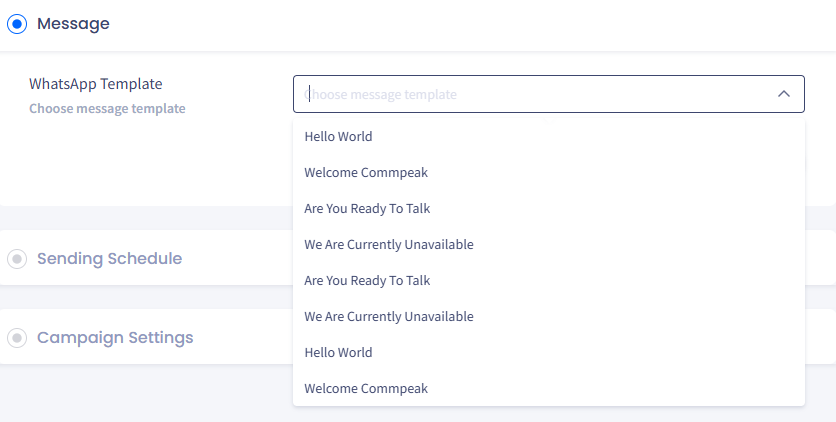
Select the template the campaign sends.
📘
NOTE
A WhatsApp conversation can only be opened with a template approved by WhatsApp Business or Facebook.
Message section: WhatsApp templates selection drop-down list
📘
NOTE
Create and manage WhatsApp Business templates on the channel itself, under Channel message content. For details, see Managing WhatsApp Templates.
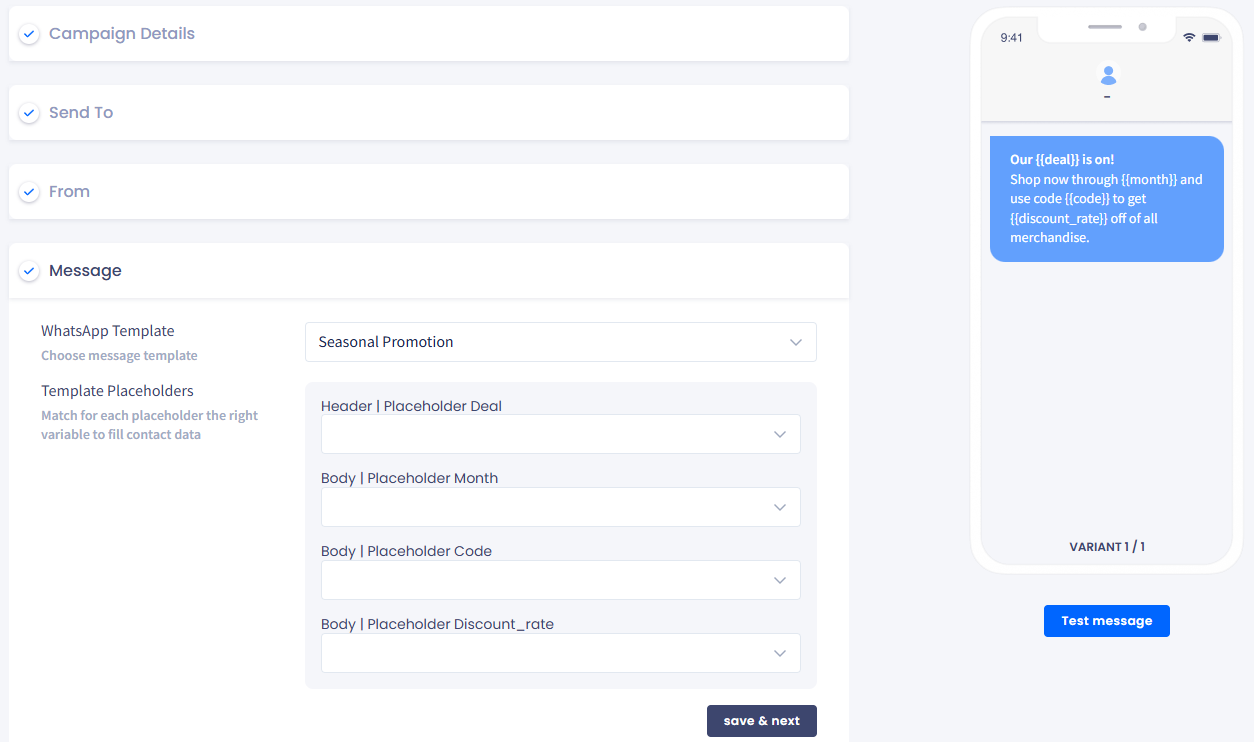
For a template that carries placeholders, map each one to the contact field it should draw from, such as the recipient's first and last name.
Mapping template placeholders to contact fields
📘
NOTE
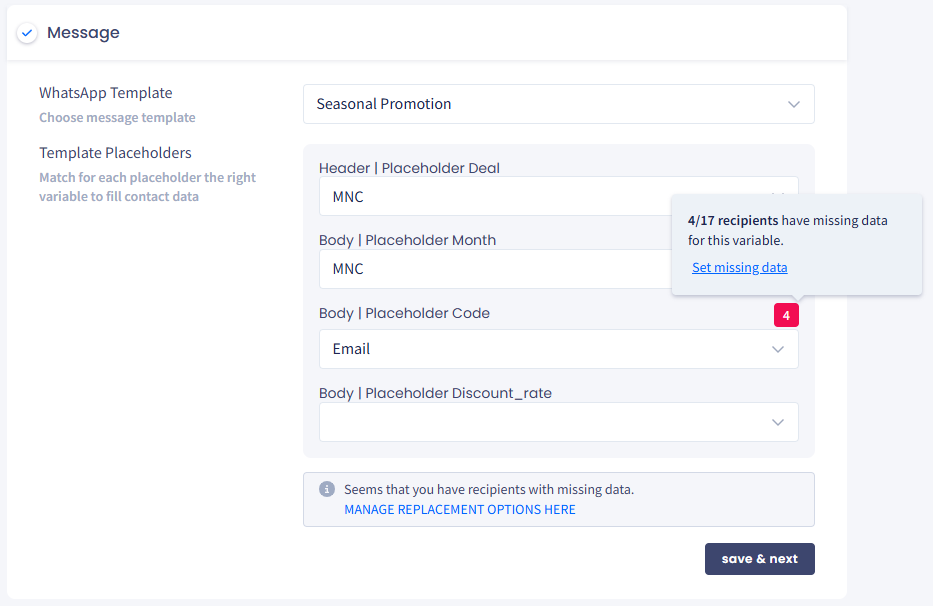
When recipients are missing the data a template needs, an icon shows how many. Click through it to manage the replacement options.
Icon with the number of recipients with missing data
To fix recipients with missing data:
Hover over the number of recipients with missing data and click MANAGE REPLACEMENT OPTION HERE.
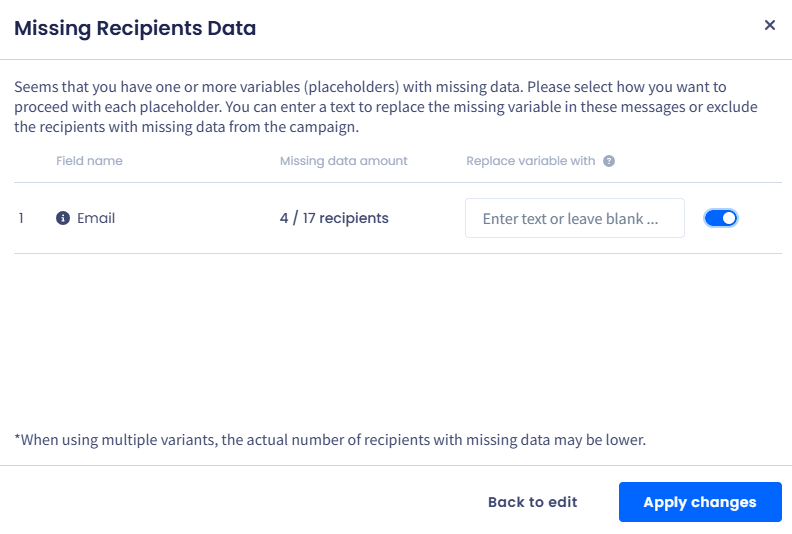
In the window that opens, either enter replacement text for the variable, or toggle the switch to the left to exclude those recipients from the campaign.
Missing Recipients Data pop-up window
Previewing the message
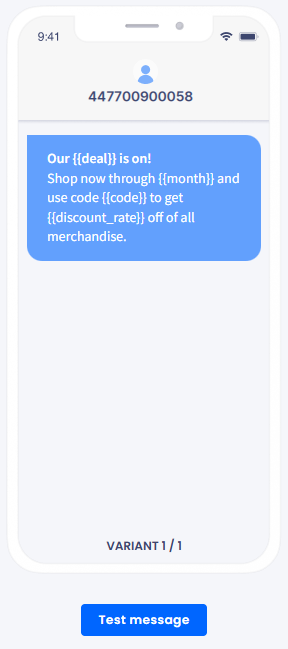
Preview how the header, the body, and in some cases the footer will look on a mobile phone.
Message preview
Sending a test message
Click Test message.
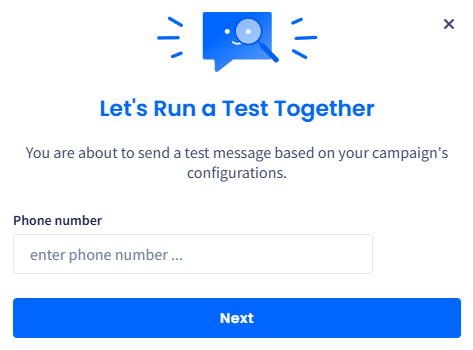
Enter the recipient's phone number.
Test running confirmation pop-up
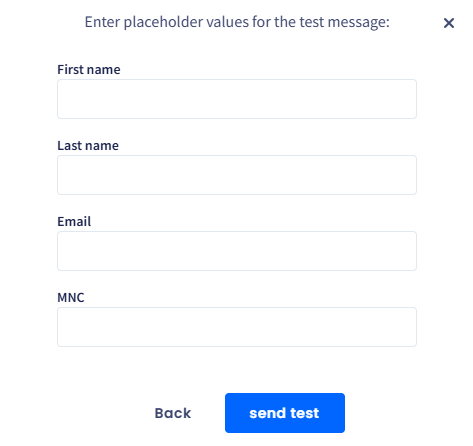
Click Next, fill in the placeholder values in the window that opens, and click Send Test.
Entering placeholder values
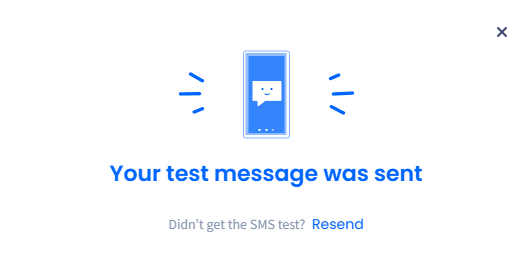
Wait for the confirmation that the message was sent.
Your test message was sent confirmation
Sending schedule
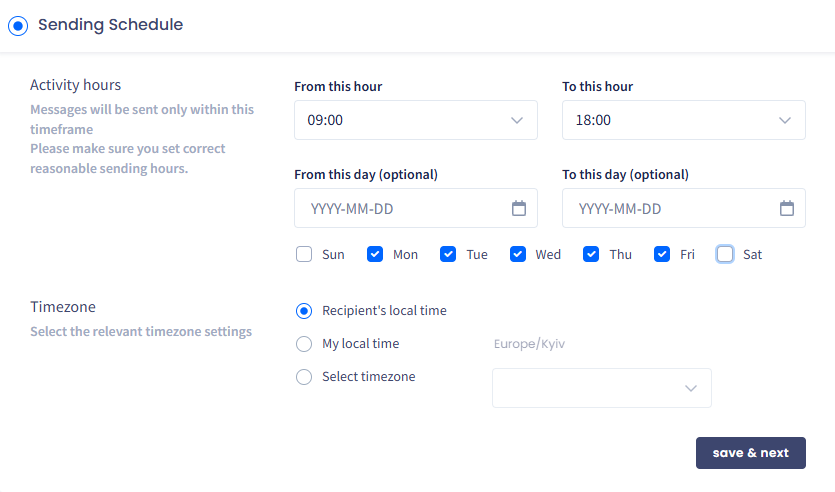
Set the time and date the campaign sends.
Sending Schedule section
To set the sending time:
Go to Activity hours and set the hours and days messages go out. Optionally, set a start and end date for the campaign.
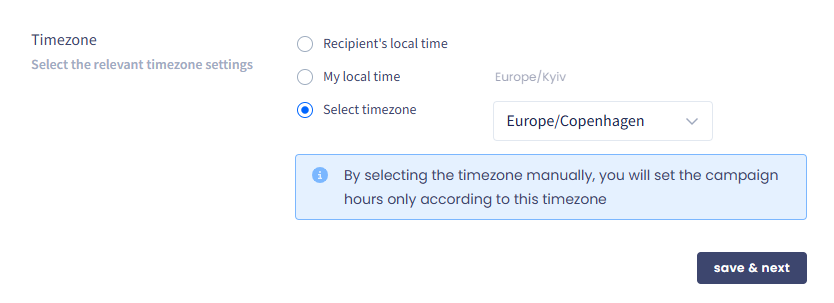
Choose the Timezone:
Recipient's local time - the local time zone of each recipient, worked out from their phone number.
Select timezone - a specific time zone from the drop-down list.
Timezone section
📘
NOTE
Recipient's local time is the safest choice. Some countries regulate the hours messages may be sent, so a campaign scheduled to your own time zone can fall outside the allowed window for a recipient elsewhere and miss them. Contacts who cannot receive the message are listed in the campaign details afterwards.
Campaign settings
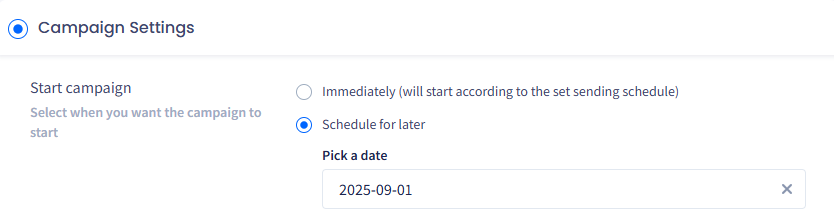
In Campaign Settings, define how the campaign runs.
Choose whether to start the campaign now or on a future date.
Start Campaign section
Select Pause campaign to pause the campaign once, or every time, after a set number of messages. Use it to review performance and adjust while the campaign is still running.
Pause Campaign section
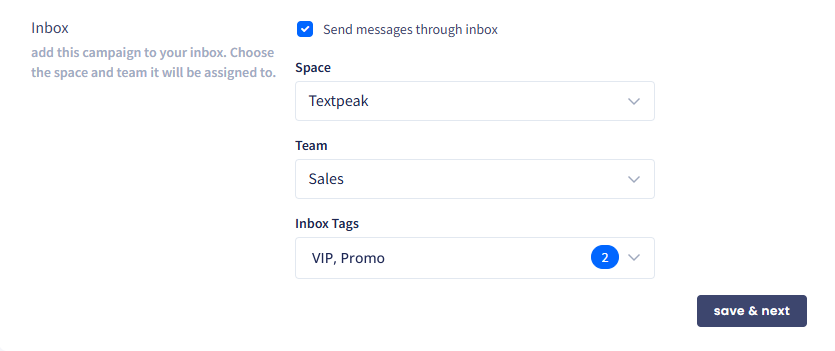
Select Send messages through inbox to route every campaign message into the Inbox, then assign it to a space and a team. You can add tags here too.
Inbox section
Click save & next.
Reviewing the campaign
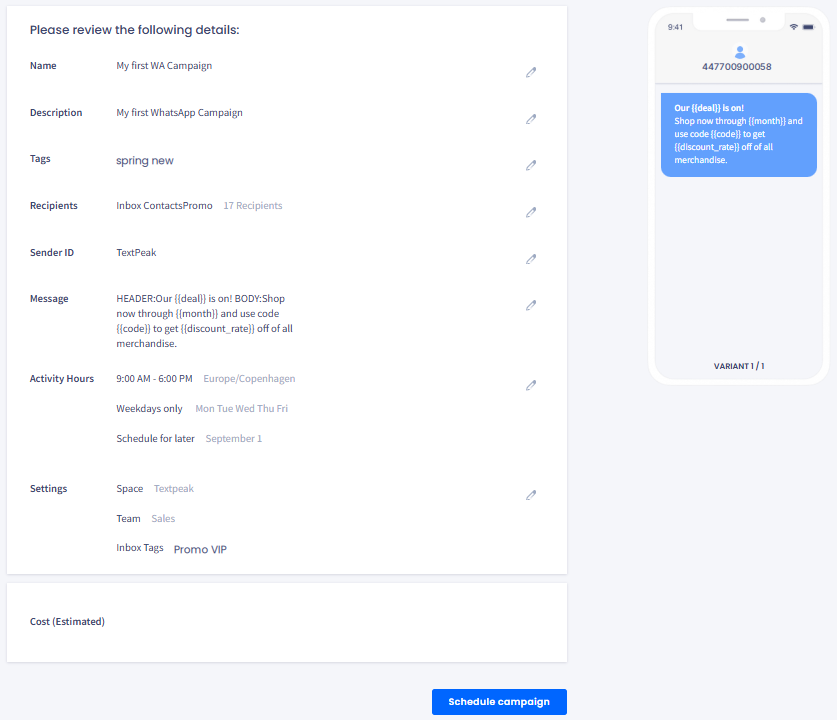
Once every step is saved, review the campaign before it goes out.
Click the edit icon to change any tab.
Check the estimated price at the bottom of the page.
Use the panel on the right to preview the header and body as they will appear on a mobile phone.
Click Start campaign, or Schedule campaign if you set a future date.
Reviewing campaign details
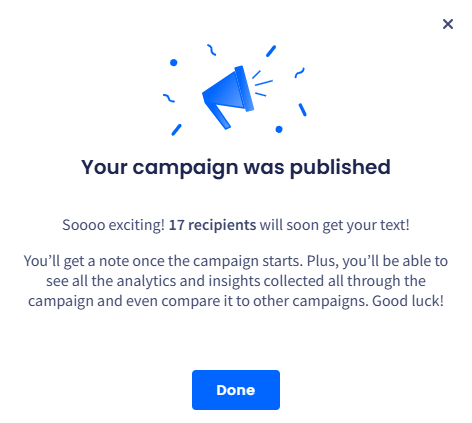
Click Done in the window that opens.
Confirmation of the campaign publishing pop-up window
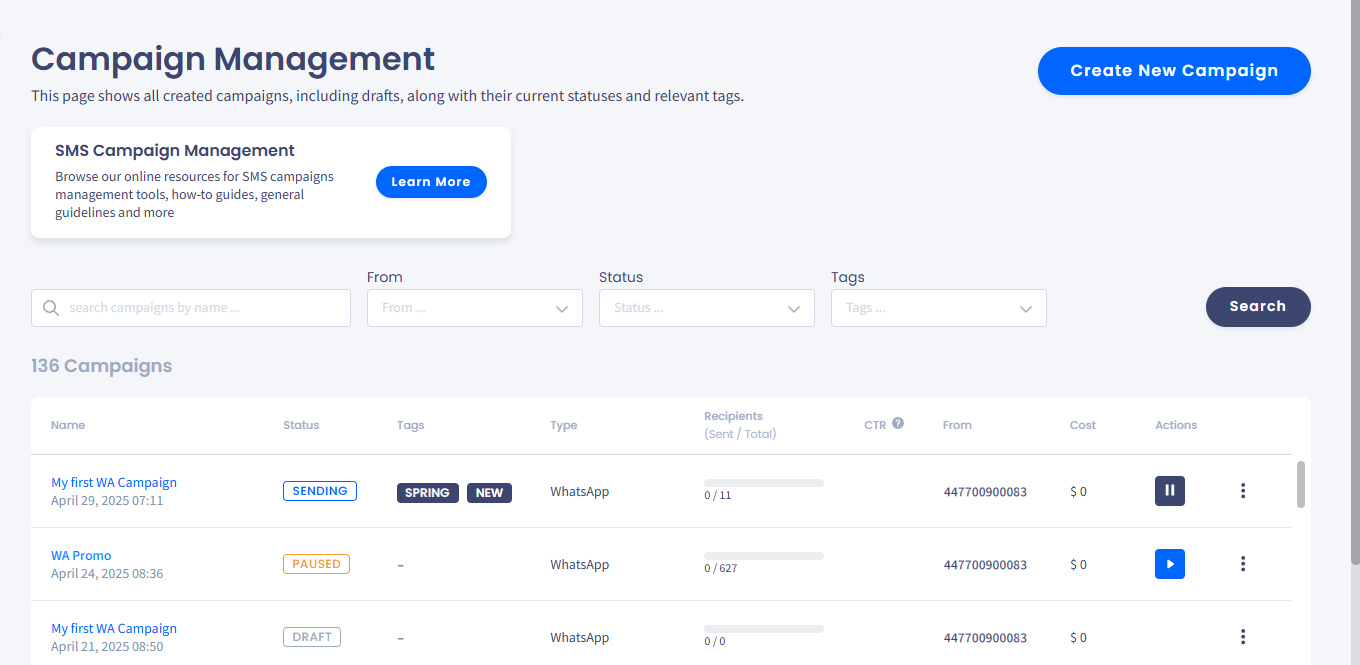
The campaign appears at the top of the Campaigns table with a Sending or Scheduled status. Pause it from the Actions button on its row.
New WhatsApp campaign in the Campaigns table: Sending status
Click the campaign to open the sidebar with its details, statistics, and domains.
Campaign sidebar data
The status changes to Finished once every message has been sent.
WhatsApp campaign in the Campaigns table: Finished status